
Baykar and the Bayraktar Family: From Workshop to Uncrewed Aviation
Engineering expertise extending from the Mini UAV to TB2 and AKINCI, and from the ship-based TB3 to the jet-powered KIZILELMA. Last verified: 23 October 2026.
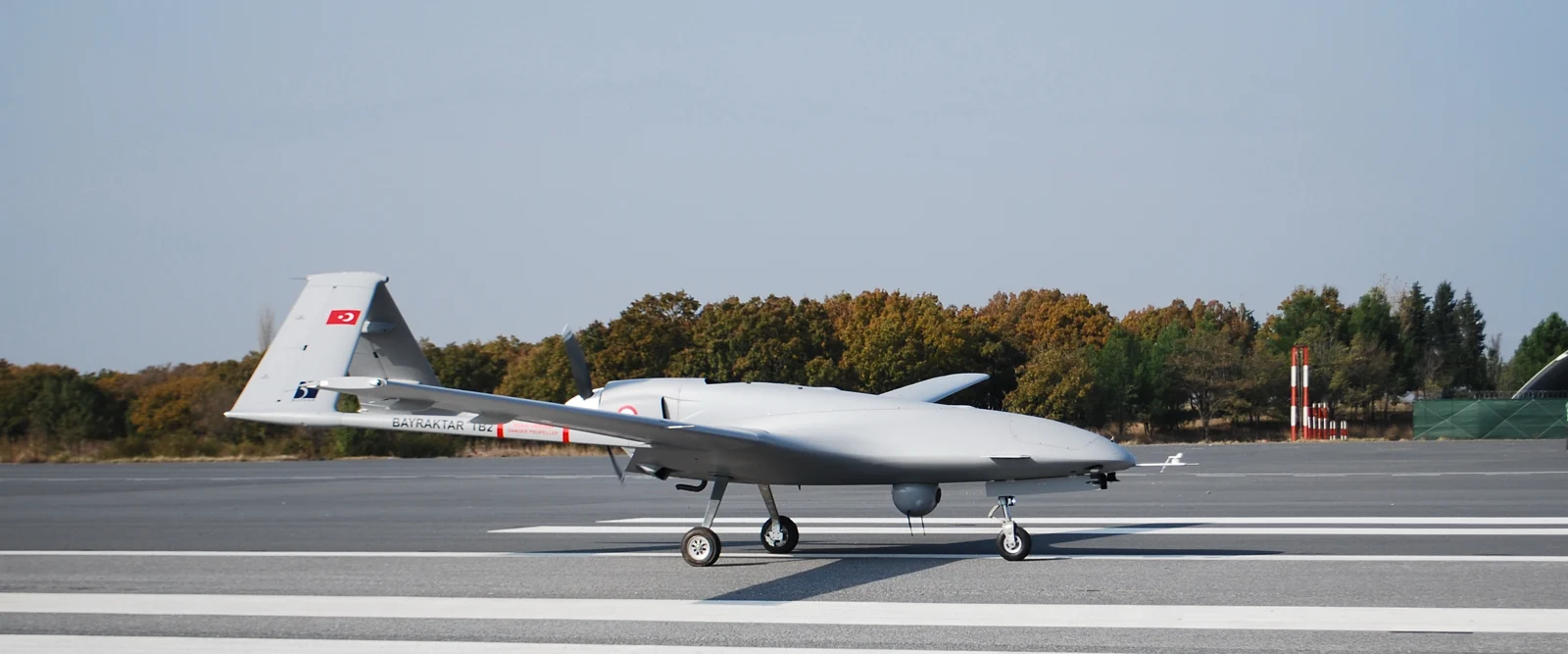
Company, family and programme names
Baykar is the company developing the aircraft and ground systems. The Bayraktar name is used for platforms including the Mini UAV, TB2, AKINCI, TB3 and KIZILELMA. Company, family and individual product names should not be used interchangeably.
Two institutional records of the starting date
Özdemir Bayraktar’s biography and a 2021 institutional news item date the automotive venture to 1984. The current company page and timeline give 1986 as the founding year. Both dates are shown together; details of the legal or organisational stages are not settled without additional documents.
Transferring manufacturing expertise into aviation
Mechanical engineer Özdemir Bayraktar was Baykar’s founder and one of the contributors to its initial industrial expertise. His official biography records his work on precision machining and component-processing equipment, and his role in design, prototyping, production and investment planning for UAV programmes. The company’s transition to aviation is thus not explained solely by the emergence of an aircraft concept: being able to manufacture a designed part and test it in the field was also part of the process.
Engineering and management roles
On official pages accessed on 23 October 2026, Selçuk Bayraktar is described as Chairman of the Board and Chief Technology Officer, and Haluk Bayraktar as General Manager. Selçuk Bayraktar’s areas of work include flight control, avionics architecture, navigation and embedded software. Haluk Bayraktar’s responsibilities extend from engineering management to production, business development and training. These roles should be understood within a product-development system involving many engineers, technicians and subcontractors; success should not be reduced to personal biography alone.
Mini UAV: Systems expertise at a small scale
The company’s timeline dates the start of UAV R&D to 2000 and automatic trials to 2004. The Mini UAV entered the inventory in 2007; its product page records the first export in 2012. The electric platform combined ground control and automatic flight at a small scale.
TB2 and AKINCI: Mature product families
The TB2’s series deliveries in 2014 marked its transition from prototype to user fleet. The 1.25 million flight hours on the current page are a manufacturer-reported indicator. AKINCI flew on 6 December 2019, and its first delivery took place on 29 August 2021. The C variant’s first flight on 24 February 2024 added a new configuration to a family already in service.
TB3: Inventory entry and mission trials
The TB3’s TCG Anadolu flight on 19 November 2024 was followed by the Ministry of National Defence’s announcement of its entry into the Land Forces inventory on 4 September 2025. The September 2026 sonobuoy trial is a new mission test; it does not establish completion of all mission capabilities.
KIZILELMA: A series-production model and testing
The jet-powered KIZILELMA made its first flight on 14 December 2022. Baykar’s bulletin of 30 July 2026 describes S2 as a series-production model and discusses new integration tests. This establishes that series production and testing are proceeding together. Because the reviewed sources contain no definitive user-acceptance document, this dossier does not present KIZILELMA as a platform with completed operational delivery. Successful testing of an aircraft and acceptance of its entire mission configuration are separate processes.
The scope of localisation
An original design does not mean that every component has the same origin. Engines, radar and electro-optical equipment are assessed by model and production series. A company’s general domestic-content percentage should not be applied as a fixed rate to every model without its method and scope being explained.
Domestic engine integration
TEI reports that the PD170 has flown on the TB3. This does not mean that the engines of every Baykar platform share the same origin.
International interoperability trials
Leonardo’s statement of 22 June 2026 confirms joint M-346 and KIZILELMA flight trials in Çorlu in May. More complex trials are planned; this result does not constitute completed operational acceptance.
Reading export contracts accurately
Baykar’s September 2026 bulletin reports contracts with 36 countries for TB2 and 16 for AKINCI. Contract counts are not counts of countries that have received or operationally use the aircraft.
The product lifecycle: Training and maintenance
Producing an aircraft in uncrewed aviation must be complemented by sustaining the system in the user’s daily operations. Baykar’s training page states that technical courses are combined with simulator practice and training flights. Its after-sales service description covers maintenance planning, spare parts, technical documentation and configuration management. These areas show that aviation consists of more than flying airframes. Fleet reliability also depends on tracking software and hardware changes, preparing personnel and maintaining continuity of upkeep. An institutional page stating that a service is offered, however, does not mean an identical readiness rate has been measured across every user’s fleet. Baykar’s growth should therefore be followed through the development of this support chain as well as the number of aircraft produced.
Continue your research.
Turkish Aviation History
From the accounts of Hezarfen and Lâgarî to the Ottoman aviation organisation, and from the Republic’s pioneers to contemporary aviation.
02 / RESEARCH DOSSIERWorld Aviation History
Source-linked world aviation history, from balloons and gliders to the first powered aircraft, jets and digital flight systems.
03 / RESEARCH DOSSIERAviation Technologies in Türkiye
Contemporary achievements in Turkish aviation: dated programme status for aircraft, uncrewed systems, avionics, engines and simulation.
REFERENCES / OPEN RESEARCH
Follow the evidence.
- We Are Baykar ↗
- History ↗
- Özdemir Bayraktar ↗
- Özdemir Bayraktar, Pioneer of National Armed UAVs, Passes Away ↗
- Selçuk Bayraktar ↗
- Haluk Bayraktar ↗
- Bayraktar Mini UAV ↗
- Bayraktar TB2 ↗
- Bayraktar AKINCI Combat UAV Enters the Inventory ↗
- Bayraktar AKINCI C Successfully Completes Its First Flight ↗
- Weekly Press Briefing at the Land Forces Training and Doctrine Command ↗
- Bayraktar TB3 Armed UAV Successfully Releases a Sonobuoy during the Denizkurdu Exercise ↗
- KIZILELMA Successfully Completes Its First Internal Weapons Bay Release Tests ↗
- TEI-PD170 Turbodiesel Aviation Engine ↗
- Leonardo and Baykar Set Major Milestone for Advanced Crewed/Uncrewed Capability Development with Successful First K-SWARM Live Trials ↗
- Payload and UAV Operator User Training ↗
- After-Sales Services ↗