
Chandra X-ray Observatory
Tracing hot gas, stellar remnants and high-energy environments.
Launched in 1999, Chandra investigates the universe in X-rays. Very hot gas, supernova remnants and processes around black holes can be studied at these wavelengths. X-ray astronomy examines physical conditions not shown in visible-light photographs.
- Launch
- 1999
- Spectrum
- X-ray
- Field
- High-energy astrophysics
01 / RESEARCH LAYER
Measuring invisible radiation
Human eyes cannot see X-rays; detector measurements can be displayed in visible colours. A red or blue region therefore does not automatically represent a directly visible hot object. Read colour explanations, energy coverage and the data together.
02 / RESEARCH LAYER
Focusing X-rays
X-rays cannot appropriately be focused at perpendicular incidence like light in an ordinary optical telescope. Chandra directs them onto mirrors at very shallow angles. Mirror geometry and detectors are designed together to measure source positions and energy properties.
03 / RESEARCH LAYER
Investigating a black hole through its surroundings
Light does not escape from inside a black hole’s event horizon. Hot surrounding matter, jets and nearby objects can be observed. Detecting an X-ray source does not always establish a unique black-hole explanation; spectra, variability and other wavelengths matter.
04 / RESEARCH LAYER
Multiple portraits of one object
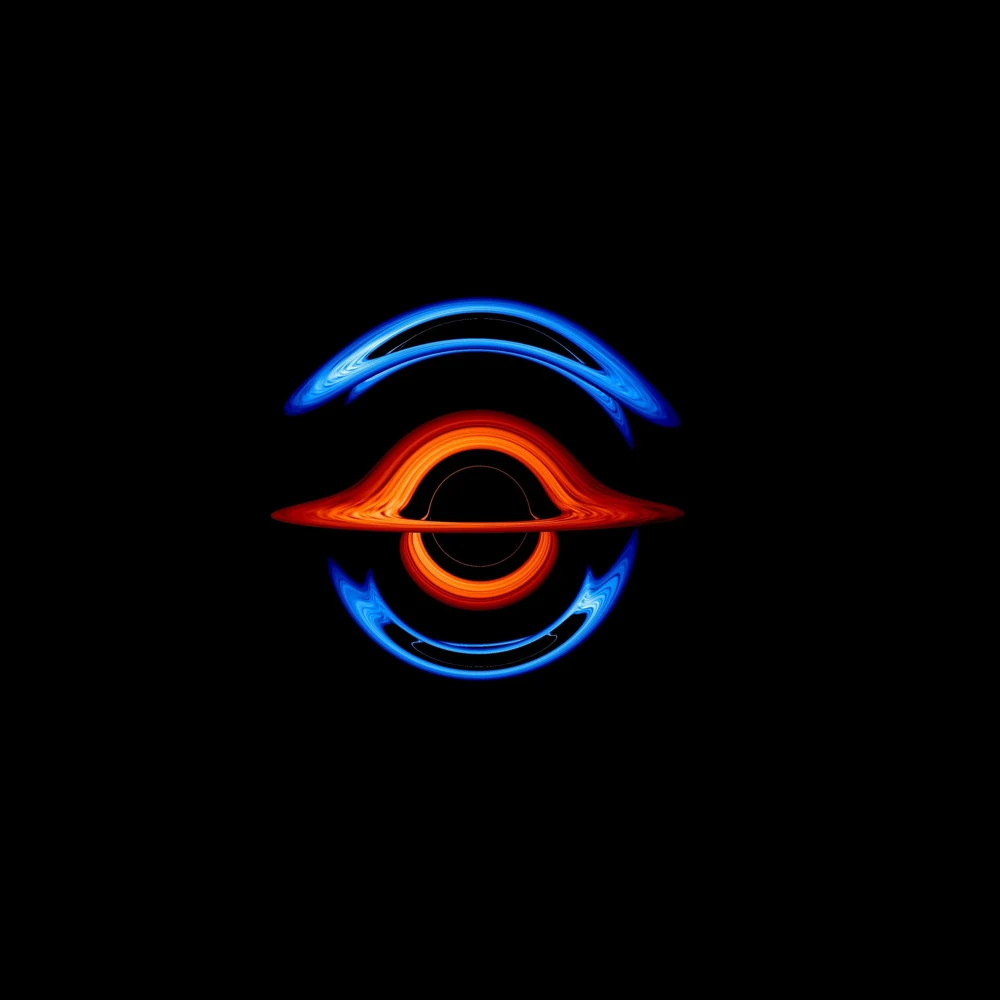
Combining Chandra with optical and infrared images compares the distributions of hot gas and stars. This page’s black-hole visual is an artist’s impression, not a black-hole photograph directly taken by Chandra. Identifying visual type is part of separating data from representation.
05 / RESEARCH LAYER
Consider brightness alongside exposure duration
When comparing two X-ray images, check total exposure, energy coverage and processing. A longer measurement may collect more photons; this does not automatically mean the source became stronger. Separate source and background regions and assess counting statistics and instrument response. Changing image contrast is also not a scientific brightness change. These questions prepare a colourful composite for quantitative comparison.
CONNECTED INVESTIGATIONS
Where can you go from this dossier?
GO TO THE SOURCE
Turn reading into research.
Editorial review: . Mission status and catalogues can change; consult the official source for current information.
Image: NASA / CXC / M. Weiss · Artist’s impression in a black-hole context.