
Europa Clipper
Investigating the conditions for habitability on an icy moon.
Europa Clipper was designed to make complementary measurements of Europa’s ice shell, possible internal ocean and composition. Launched on 14 October 2024, its scientific focus is investigating whether environments could support life, rather than directly detecting life itself.
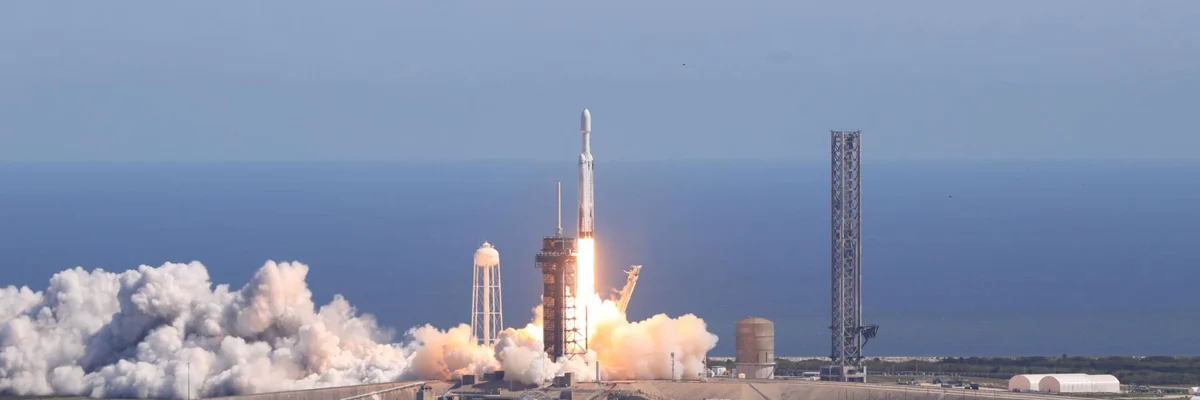
- Launch
- 14 October 2024
- Destination
- Europa / Jupiter system
- Method
- Multiple flybys
01 / RESEARCH LAYER
Rather than remaining continuously around Europa
The mission architecture aims for many Europa flybys from an orbit around Jupiter, sampling different regions and encounter geometries. Radiation environment, power, communications and scientific measurement timing are considered within one mission plan.
02 / RESEARCH LAYER
Measuring ice, surface and interior together
Radar, imaging, spectra and magnetic-field measurements address different questions. One instrument can examine surface structure while another indirectly tests conductive layers inside. Rather than relying on one type of measurement, investigate how closely independent methods fit the same model.
03 / RESEARCH LAYER
A flyby is an observing window
Each encounter offers particular lighting and distance conditions. Pointing instruments, storing data and transmitting to Earth are planned within limited resources. This dossier is not live trajectory tracking; verify flight phase, arrival plans and changes at the official mission page.
04 / RESEARCH LAYER
What does an ocean establish?
Liquid water is important, but does not by itself establish life. Energy sources, chemical ingredients and environmental persistence also matter. Europa is a strong example for learning which extraterrestrial-life questions can be measured directly and which require model interpretation.
05 / RESEARCH LAYER
Testing a model of an internal ocean
For an internal-ocean hypothesis, list the expected signals separately: magnetic response, surface composition and shell structure are different quantities. Ask which alternative models could also explain each measurement. Uncertainty in one method does not automatically disappear because another method is available. A strong result brings independent observations together within a shared physical model. This explains the value of indirect evidence without pretending to have directly seen beneath the ice.
CONNECTED INVESTIGATIONS
Where can you go from this dossier?
GO TO THE SOURCE
Turn reading into research.
Editorial review: . Mission status and catalogues can change; consult the official source for current information.
Image: NASA / JPL-Caltech · Europa Clipper launch context.