
The science and the people
behind the cockpit.
Piloting requires not only reading instruments but also understanding the physical quantities they represent.
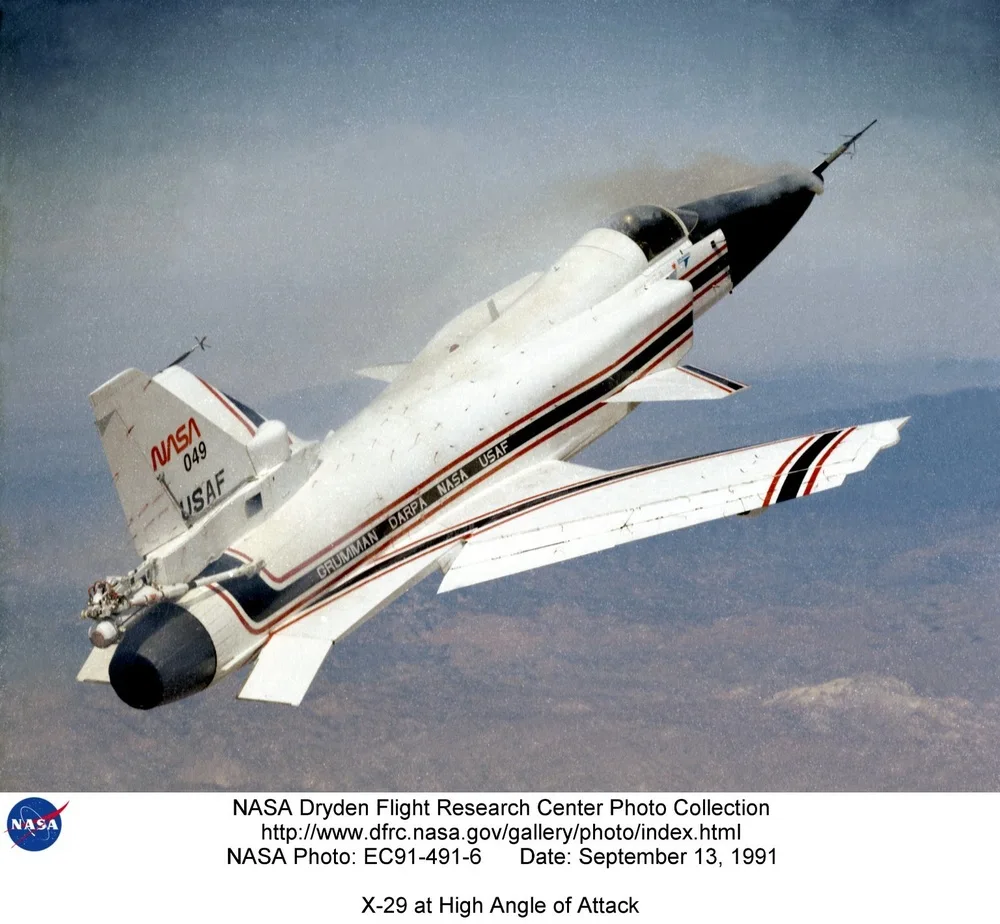
Angle of attack and pitch attitude are different
Angle of attack is referenced to the relative airflow; pitch attitude is referenced to the horizon. A stall is associated with the critical angle of attack; stall speed depends on weight, load factor and configuration.
Which speed do we mean?
IAS is the direct instrument reading. CAS is IAS corrected for instrument and position errors. TAS is the actual speed relative to the air mass. Groundspeed also includes the vector effect of wind. The V in the lift equation is not groundspeed.
When density decreases, a higher TAS is needed for the same dynamic pressure. No single multiplier relates IAS to TAS at every altitude. A speed table should specify the type of airspeed and its unit as well as the value.
The atmosphere is not merely a backdrop
Density altitude expresses current air density as its equivalent in the standard atmosphere; it is not terrain elevation. Pressure, temperature and humidity affect density. The standard atmosphere is a reference for comparison, not the day’s weather.
Actual take-off or climb performance cannot be calculated from the lift equation alone. Published aircraft-specific data and the relevant conditions are required. The density examples here show relationships between concepts only; they do not constitute a flight-planning tool.
Load factor in a turn
In a constant-altitude, steady, coordinated turn, n = L/W = 1/cosφ. For example, at 60°, n=2. At the same weight, configuration and C_Lmax, the stall speed ratio is √n. This is not a manoeuvre recommendation.
Managing energy and attention together
Simplified mechanical energy is expressed as mgh + ½mV². Energy can be transferred between altitude and airspeed; the controls do not create new energy. Thrust contributes to energy gain, drag to loss.
Human performance must be considered together with the design of equipment, environments and work. Attention is not unlimited; reliable information flow, understandable interfaces and training matter. Simply calling for ‘more care’ does not provide a sufficient explanation.
Fatigue is associated with sleep loss, prolonged wakefulness, biological rhythms and workload. Duty-time limits do not eliminate every effect. This section does not provide medical assessment or medication advice.
[6] FAA · [7] ICAO · [8] ICAO · [9] Wingelaar-Jagt et al.; Frontiers in Physiology
Continue your research.
Turkish Aviation History
From the accounts of Hezarfen and Lâgarî to the Ottoman aviation organisation, and from the Republic’s pioneers to contemporary aviation.
02 / RESEARCH DOSSIERWorld Aviation History
Source-linked world aviation history, from balloons and gliders to the first powered aircraft, jets and digital flight systems.
03 / RESEARCH DOSSIERAviation Technologies in Türkiye
Contemporary achievements in Turkish aviation: dated programme status for aircraft, uncrewed systems, avionics, engines and simulation.
REFERENCES / OPEN RESEARCH
Follow the evidence.
- AFH Chapter 5: Maintaining Aircraft Control: Upset Prevention and Recovery Training ↗
- PHAK Chapter 5: Aerodynamics of Flight ↗
- PHAK Chapter 8: Flight Instruments ↗
- PHAK Chapter 4: Principles of Flight ↗
- PHAK Chapter 11: Aircraft Performance ↗
- AFH Chapter 4: Energy Management: Mastering Altitude and Airspeed Control ↗
- Human Performance ↗
- Fatigue Management ↗
- Fatigue in Aviation: Safety Risks, Preventive Strategies and Pharmacological Interventions ↗