
The science of flight.
From forces to understanding.
Rather than explaining lift with a single slogan, let us consider forces, flow and measurement together.
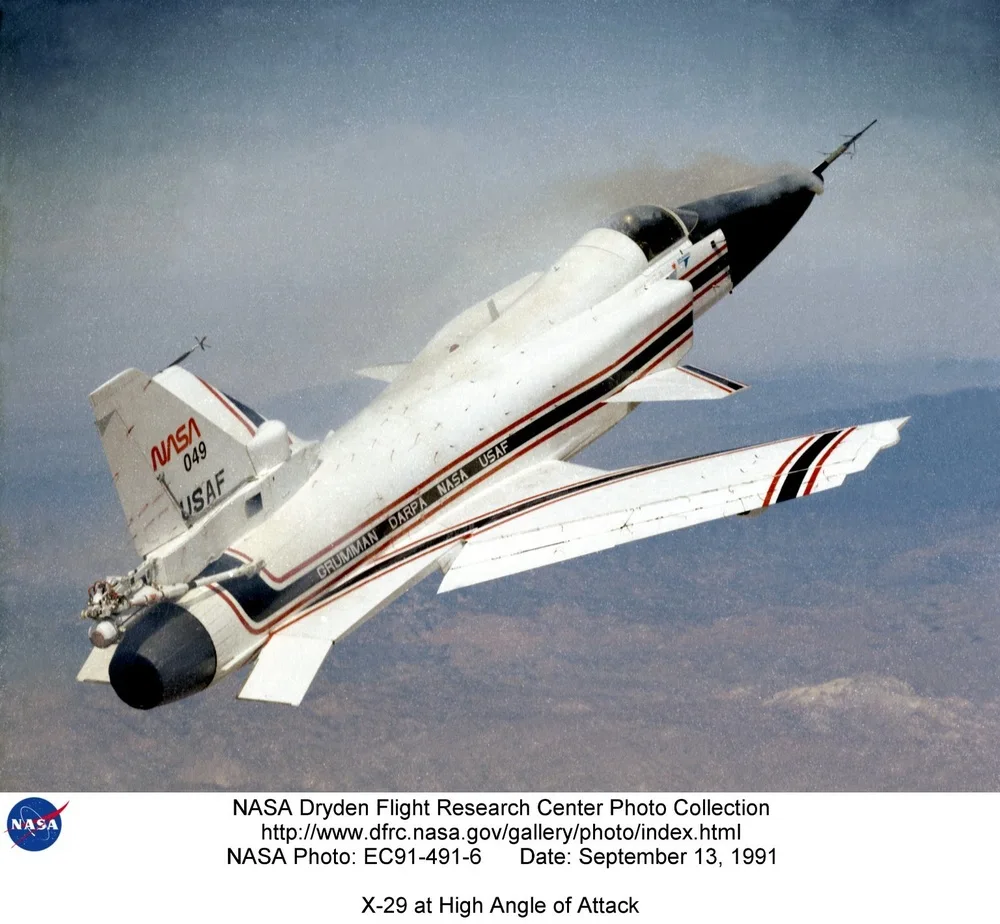
Four forces, one motion
Weight, lift, drag and thrust must be considered together in flight. Their directions matter as much as their magnitudes. Weight points towards Earth’s centre; lift is perpendicular to the relative airflow, while drag opposes motion. Thrust direction depends on the propulsion system’s installation.
In simplified straight, constant-speed, constant-altitude flight, force components balance. This special condition cannot be generalised to every flight situation. During a turn, a change in direction produces acceleration even if speed remains constant. When banking the wing in a diagram, change the direction of the lift vector too.
Reading Bernoulli and Newton together
Pressure distribution and the change in the air’s momentum are complementary explanations of the same event. Bernoulli and Newton do not exclude each other; conservation of mass, momentum and energy must all be satisfied.
Air particles separating at the leading edge do not have to reach the trailing edge at the same time. The explanation that they meet simultaneously despite one taking a longer path is incorrect. Symmetrical aerofoils can also produce lift at an appropriate angle of attack.
[2] NASA Glenn Research Center · [3] NASA Glenn Research Center
The symbols in the lift equation
L = ½ρV²SC_L. L is lift, ρ density, V relative airspeed, S wing area and C_L the lift coefficient. SI units give a result in newtons. Doubling speed produces four times the lift only while ρ, S and C_L remain constant.
Drag and reference area
D = ½ρV²SC_D. The reference area used with the coefficient must be specified. C_D values based on different area definitions cannot be compared directly.
A constant coefficient cannot be extended to all speeds: viscosity and compressibility effects can change. The laboratory’s fixed C_D does not represent all the drag behaviour of a real aircraft.
[5] NASA Glenn Research Center · [6] NASA Glenn Research Center
Estimate the numerical example first
Hypothetical example: ρ=1.225; V=40; S=16; C_L=0.6; C_D=0.04 → L=9,408 N, D=627.2 N.
[4] NASA Glenn Research Center · [5] NASA Glenn Research Center
From a visual experiment to a scientific explanation
Distinguish observation from interpretation; do not treat a tabletop demonstration as a complete representation of flow around a real wing.
[7] TÜBİTAK Science Youth · [4] NASA Glenn Research Center · [5] NASA Glenn Research Center
INTERACTIVE / TWO EDUCATIONAL MODELS
Change a variable. See the relationship.
Calculations run on your device; they do not produce aircraft performance predictions, actual flight plans or manoeuvre recommendations.
Force laboratory: Speed squared
q = ½ρV² · L = qSC_L · D = qSC_D

- Dynamic pressure / Pa
- Lift / N
- Drag / N
- L/D / dimensionless
Assumptions, units and limitations
- Steady low-speed model; fixed coefficients and a common reference area.
- Stall, changes in Mach/Reynolds number, engines and flight performance are not modelled.
[4] NASA Glenn Research Center · [5] NASA Glenn Research Center · [6] NASA Glenn Research Center
The geometry of forces in a bank
L cos φ = W · n = 1/cos φ
- Load factor / dimensionless
- Stall speed ratio / dimensionless
Assumptions, units and limitations
- Steady, coordinated, constant-altitude turn.
- For the stall ratio, weight, configuration and C_Lmax are constant; manoeuvre transitions are not modelled.
Concepts of flight.
- Lift
- The component of aerodynamic force perpendicular to motion relative to the free stream. It need not always be vertical relative to Earth.
- Drag
- The component of aerodynamic force opposing motion along the free-stream direction.
- Thrust
- The force generated by the propulsion system; its direction depends on the system’s installation.
- Weight
- The gravitational force acting on a mass, expressed in units of force.
- Angle of attack (α)
- The angle between the aerofoil chord line and the relative airflow. It should not be confused with the nose’s attitude relative to the horizon.
- Stall
- In general flight-training terms, an aerodynamic condition involving reduced lifting capability after the critical angle of attack is exceeded. It is not defined by a fixed groundspeed.
- Dynamic pressure (q)
- q = ½ρV². Expressed in pascals in SI units.
- Lift coefficient (C_L)
- The ratio L/(qS), a dimensionless coefficient depending on geometry, angle of attack and flow conditions.
- Drag coefficient (C_D)
- The ratio D/(qS). The reference area used must be stated alongside its value.
- IAS (Indicated airspeed)
- The speed read directly from the airspeed indicator, without correction for instrument and position errors.
- CAS (Calibrated airspeed)
- IAS corrected for instrument and position errors.
- TAS (True airspeed)
- The aircraft’s actual speed relative to the surrounding air mass; distinct from groundspeed.
- Density altitude
- The altitude in the standard atmosphere corresponding to the current air density. This is not the same concept as elevation on a map.
- Load factor (n)
- In the simplified model, the ratio of lift to weight, n = L/W. In a turn, n = 1/cosφ applies only under the specified conditions.
- Human factors
- Applying knowledge of human capabilities and limitations to the design of equipment, environments and work.
Continue your research.
Turkish Aviation History
From the accounts of Hezarfen and Lâgarî to the Ottoman aviation organisation, and from the Republic’s pioneers to contemporary aviation.
02 / RESEARCH DOSSIERWorld Aviation History
Source-linked world aviation history, from balloons and gliders to the first powered aircraft, jets and digital flight systems.
03 / RESEARCH DOSSIERAviation Technologies in Türkiye
Contemporary achievements in Turkish aviation: dated programme status for aircraft, uncrewed systems, avionics, engines and simulation.
REFERENCES / OPEN RESEARCH
Follow the evidence.
- Four Forces on an Airplane ↗
- Bernoulli and Newton ↗
- Lift ↗
- Lift Equation ↗
- Drag Equation ↗
- Drag Coefficient ↗
- Observe Bernoulli’s Principle on Aircraft Wings ↗
- PHAK Chapter 5: Aerodynamics of Flight ↗
- AFH Chapter 5: Maintaining Aircraft Control: Upset Prevention and Recovery Training ↗
- PHAK Chapter 8: Flight Instruments ↗
- PHAK Chapter 4: Principles of Flight ↗
- Human Performance ↗